← Back to Work

3D Scanning Systems

Commercial-grade full-body 3D capture, designed simulation-first: an 87-camera DSLR array taken from virtual prototype to five production systems that have scanned tens of thousands of people.

Role
System Design, Engineering, R&D Lead
Where
Dopl
System
87-DSLR array · 5 production units
Stack
Reality Capture · Python · Java · CUDA · Raspberry Pi
Timeline
10 months, concept to production

Research Objectives

In 2020, the challenge was to develop a commercial-grade 3D scanning system satisfying three critical requirements at once: exceptional scan quality — sub-millimeter geometric accuracy with photorealistic texture reproduction — operational robustness for continuous commercial use, and accessibility for operators with minimal technical expertise.

The scope covered both hardware architecture and the complete digital asset pipeline, from raw image acquisition to final textured mesh — delivered production-ready within a 10-month R&D timeline.
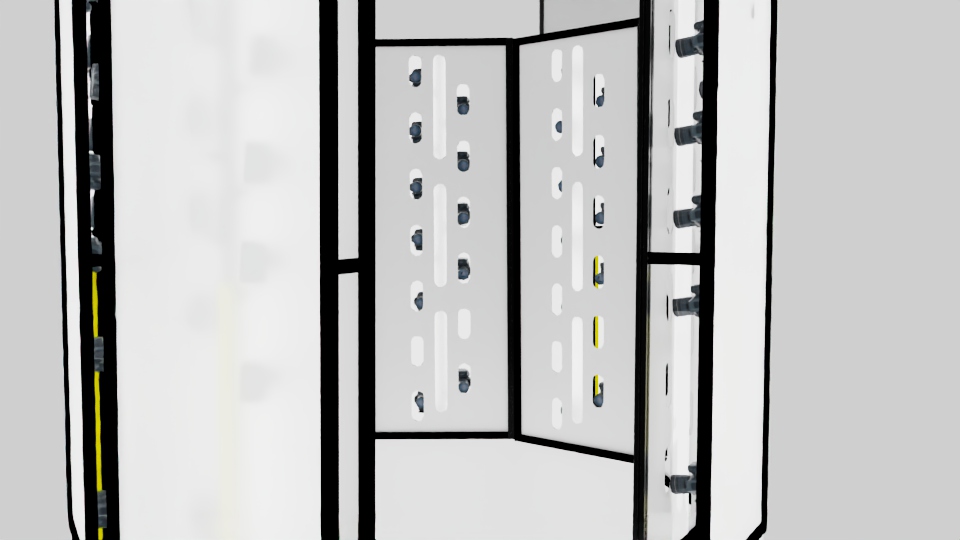
Simulation First

Before any hardware was built, the entire capture system existed as a digital twin. A virtual scanning environment modeled camera poses, optical characteristics, lighting conditions, and subject positioning — enabling parametric optimization across thousands of configuration permutations.

Monte Carlo methods stress-tested the design against varying subject poses and environmental conditions. This computational validation phase cut development time and capital expenditure dramatically, and guaranteed the physical system would hit its performance targets on deployment.

Reconstruction Confidence

Camera positioning and specification were locked through a primary reconstruction study: measuring how mean reprojection error falls as more cameras observe each surface point. Each reconstructed point may be seen by multiple cameras — increasing this overlap improves triangulation reliability, while regions with poor visibility, reflections, or weak texture retain higher error.

Drag the slider to explore the curve behind the final camera layout.

System Architecture

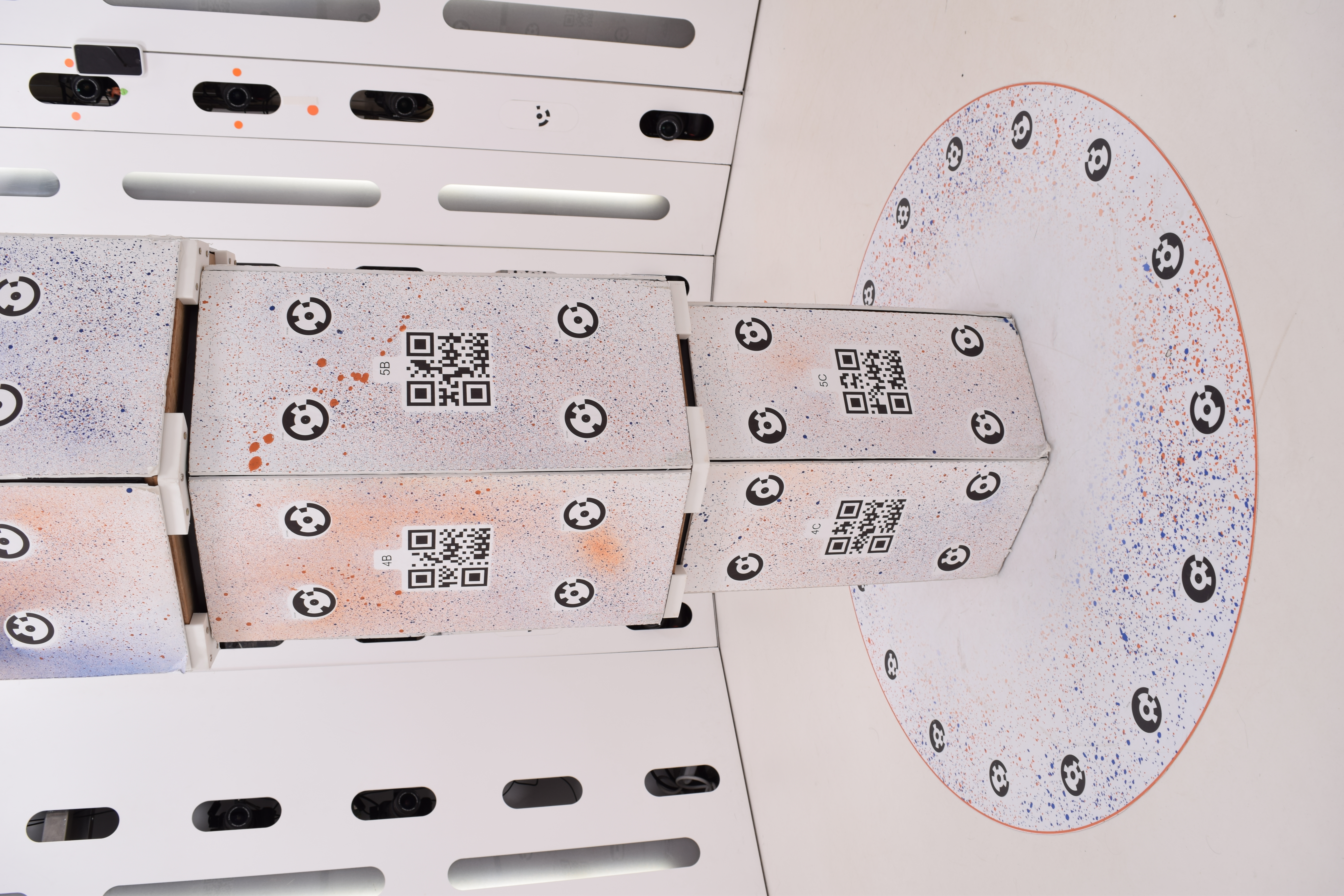
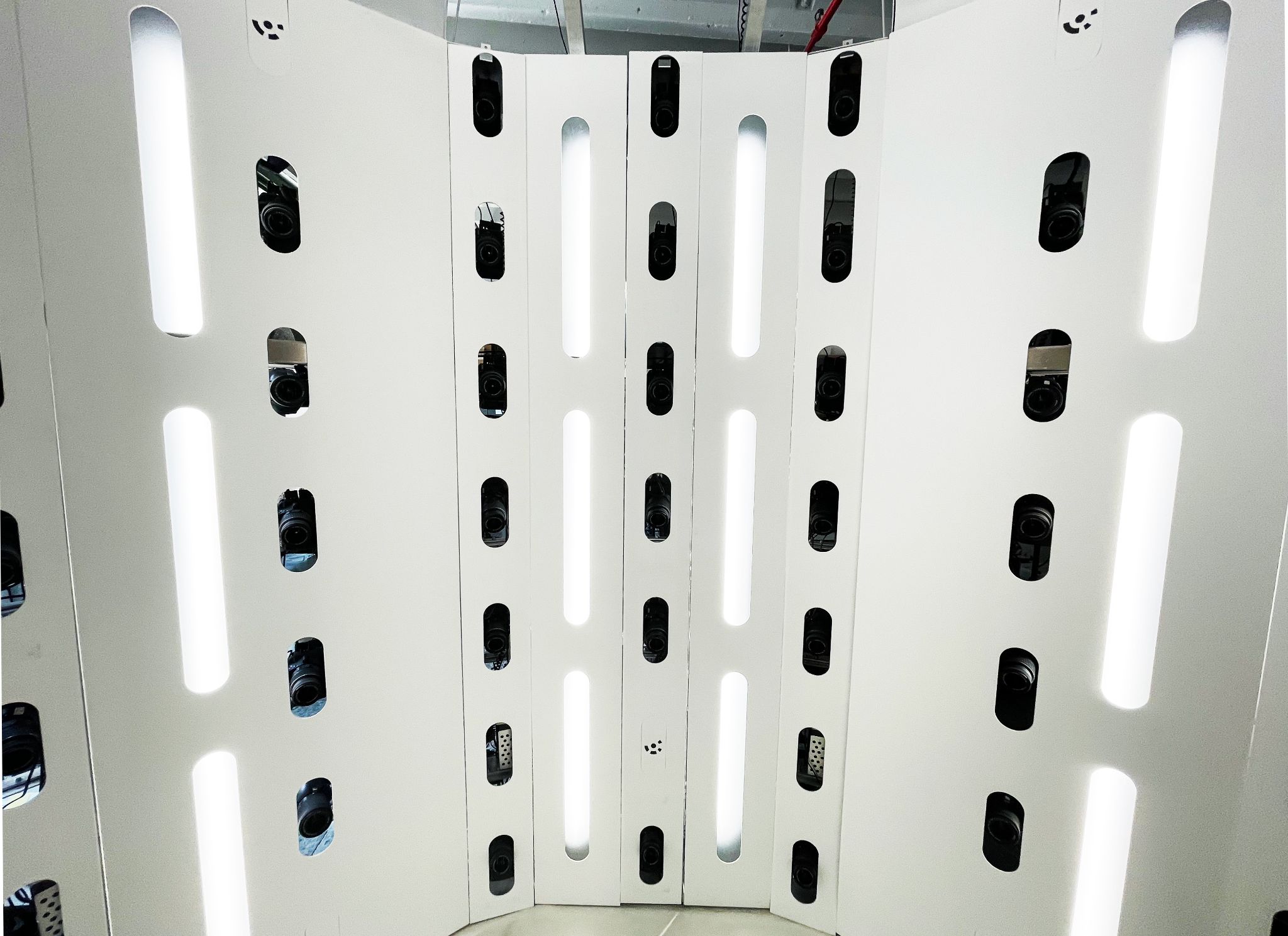
The production system is an 87-camera DSLR array arranged in a geodesic-inspired spherical configuration — full 360° coverage with camera placement optimized in simulation to minimize occlusion while preserving the baselines and overlap that robust reconstruction demands.

Custom triggering hardware built on Raspberry Pi microcontrollers fires every camera with sub-millisecond precision — freezing a human subject in a single instant, free of motion artifacts. Automated calibration routines maintain geometric accuracy across the operational lifecycle, and a controlled lighting array keeps results consistent. Five complete units were manufactured, each iteration refined by empirical findings from the last.

Computational Pipeline

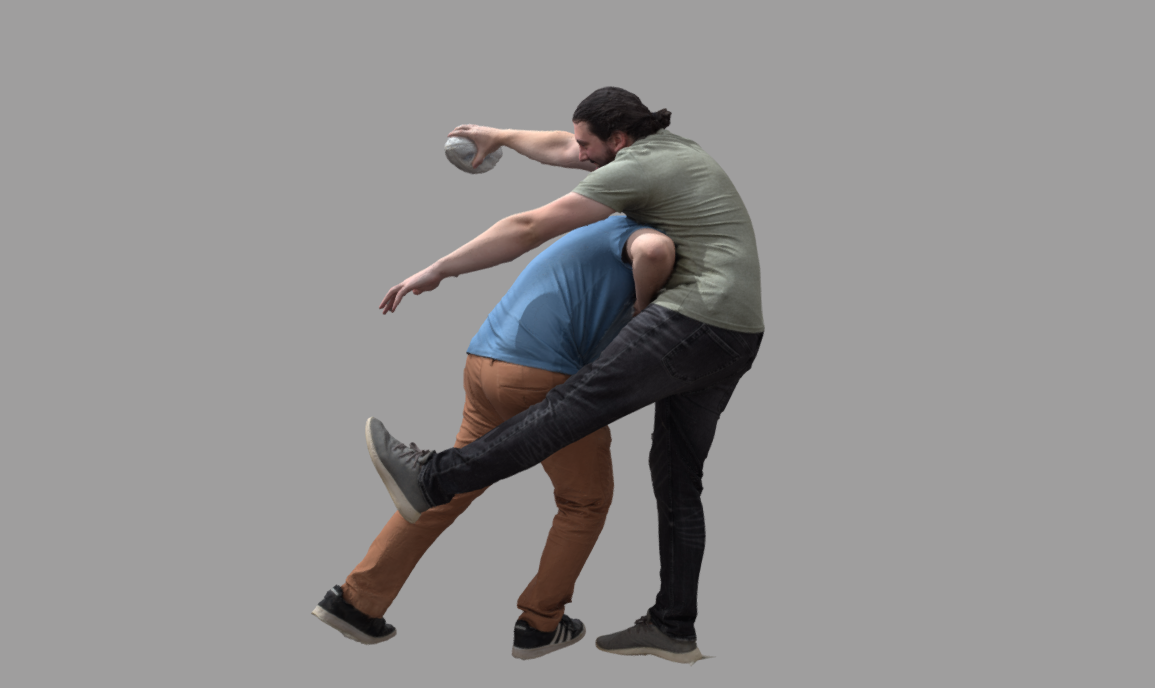
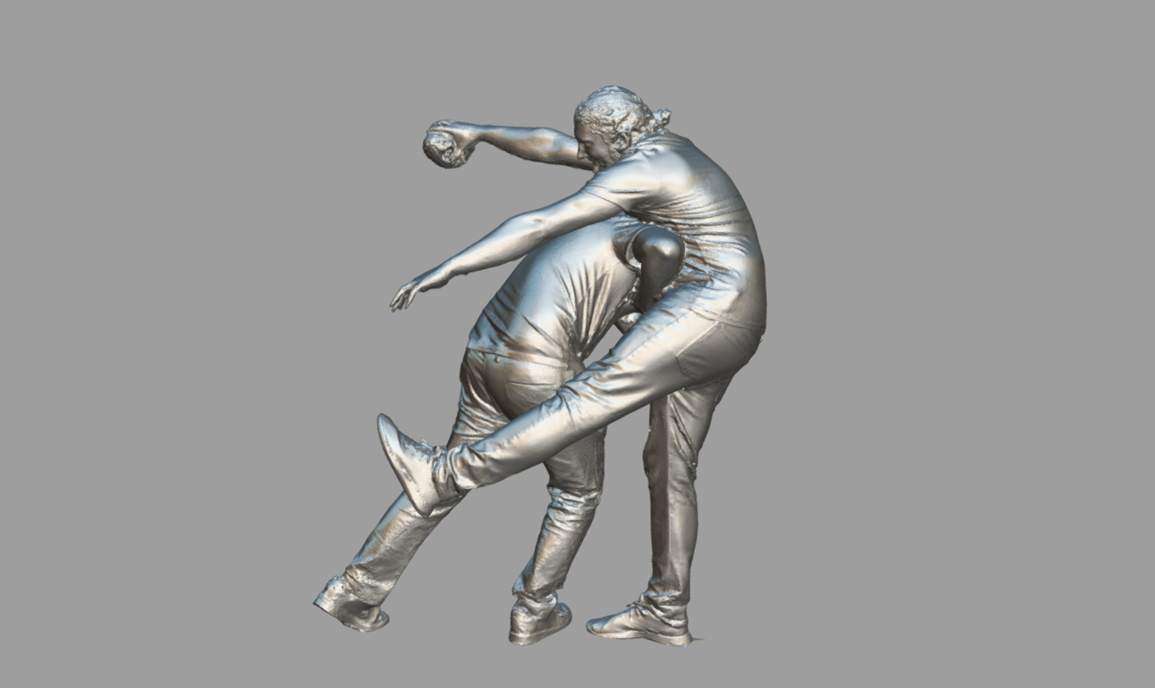
Reconstruction runs through sequential stages — synchronized capture, feature extraction, point cloud generation, surface reconstruction, texture projection, and final refinement — turning 87 simultaneous photographs into a topologically clean, photorealistic 3D human.

Reality Capture serves as the reconstruction engine, wrapped in custom Python and Java automation for pipeline orchestration and data management, with CUDA GPU acceleration pushing high-resolution multi-view processing toward real time.

Deployment

Five scanning systems went into continuous operation, collectively digitizing tens of thousands of people — production-scale validation of both the hardware and the pipeline under real-world conditions, with every session feeding back into calibration, throughput, and quality-assurance refinements.

The systems supported character digitization for Season 2 of Severance, hybrid puppet-digital character work with the Jim Henson Company, artist digitization for Sony Music, photorealistic scans for Activision collectibles, digital humans for Apple TV+’s The Afterparty, scanning work for the Pentagon and Wieden+Kennedy, work with Riot Games and the Harvard Lampoon, and CLO3D fashion-technology integration.